PROJECT ID: QNT-2025 // QUANTUM MACHINE LEARNING
QC1: Hardware-Efficient VQC for IQM Spark
QC1 is Axion's main research project: a reproducible, hardware-aware quantum machine learning program built around IQM Spark ODRA 5. The team moved beyond a single accuracy claim and built a full evaluation framework for banknote authentication, comparing a simulator-oriented CRX/CRY ansatz with an ODRA-native RZ/CZ design across compilation cost, fidelity proxies, expressibility diagnostics, noise-aware cross-validation, and direct physical-QPU performance.
View RepositoryResearch Program
From Classifier to Methodology
The benchmark uses the UCI Banknote Authentication dataset as a compact, measurable binary-classification task for near-term hardware. The current pipeline engineers a fifth interaction feature, scales all inputs to an angle-encoding range, and evaluates five-qubit VQC designs on both exact statevector references and IQM Spark ODRA 5 hardware.
Core Finding
On physical hardware, the ODRA-native RZ/CZ ansatz is not just tidier after transpilation; it changes the end-to-end result. At depth L=4, the tailored model reaches 87.6% accuracy and F1=0.846 on IQM Spark, compared with 74.5% accuracy and F1=0.583 for the simulator-oriented baseline under the same evaluation protocol.
Conference Talk
2026 IEEE International Conference on Quantum Control, Computing, and Learning
Hardware-Efficient Ansatz Design and Noise-Aware Analysis of a Variational Quantum Classifier for IQM Spark
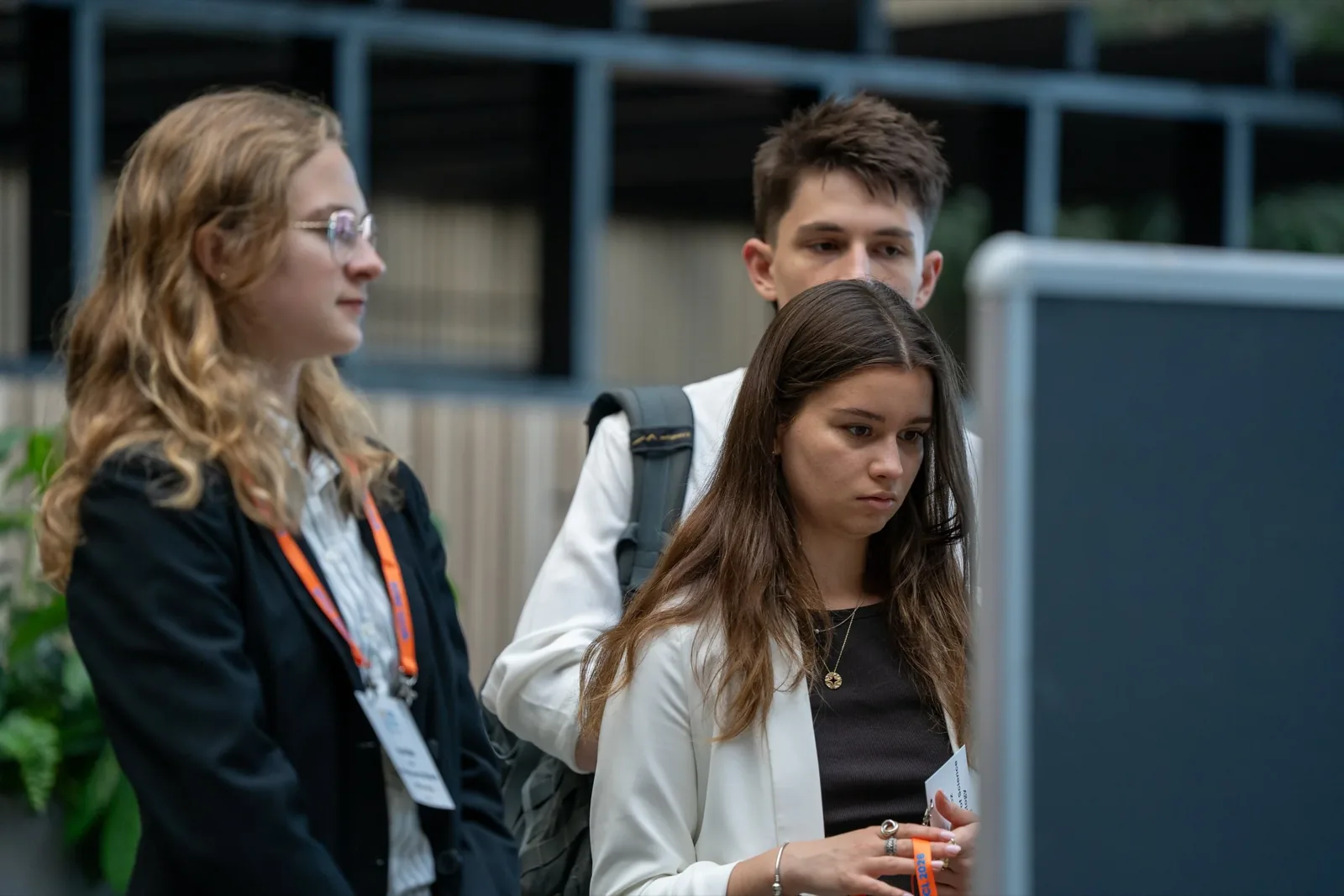
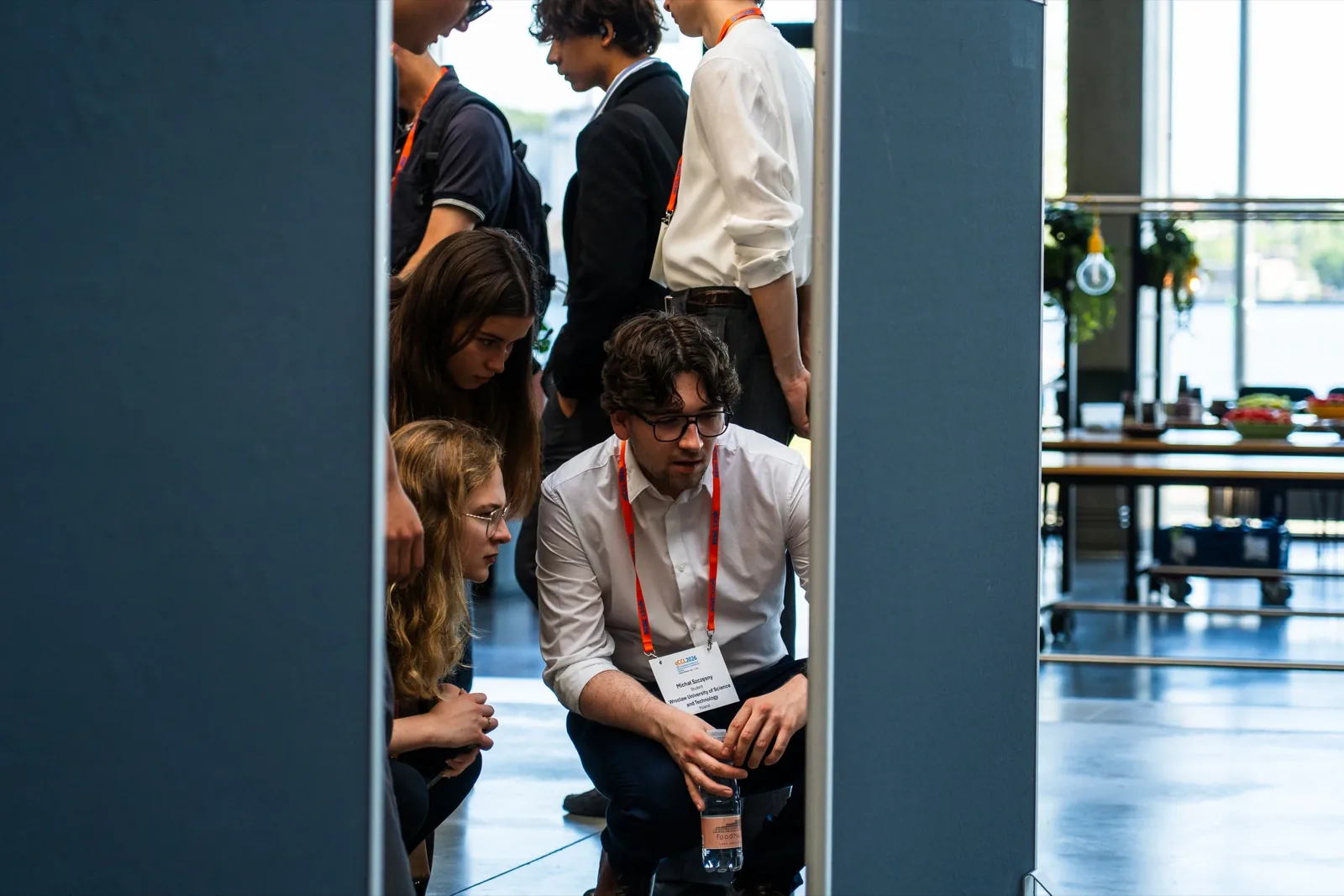
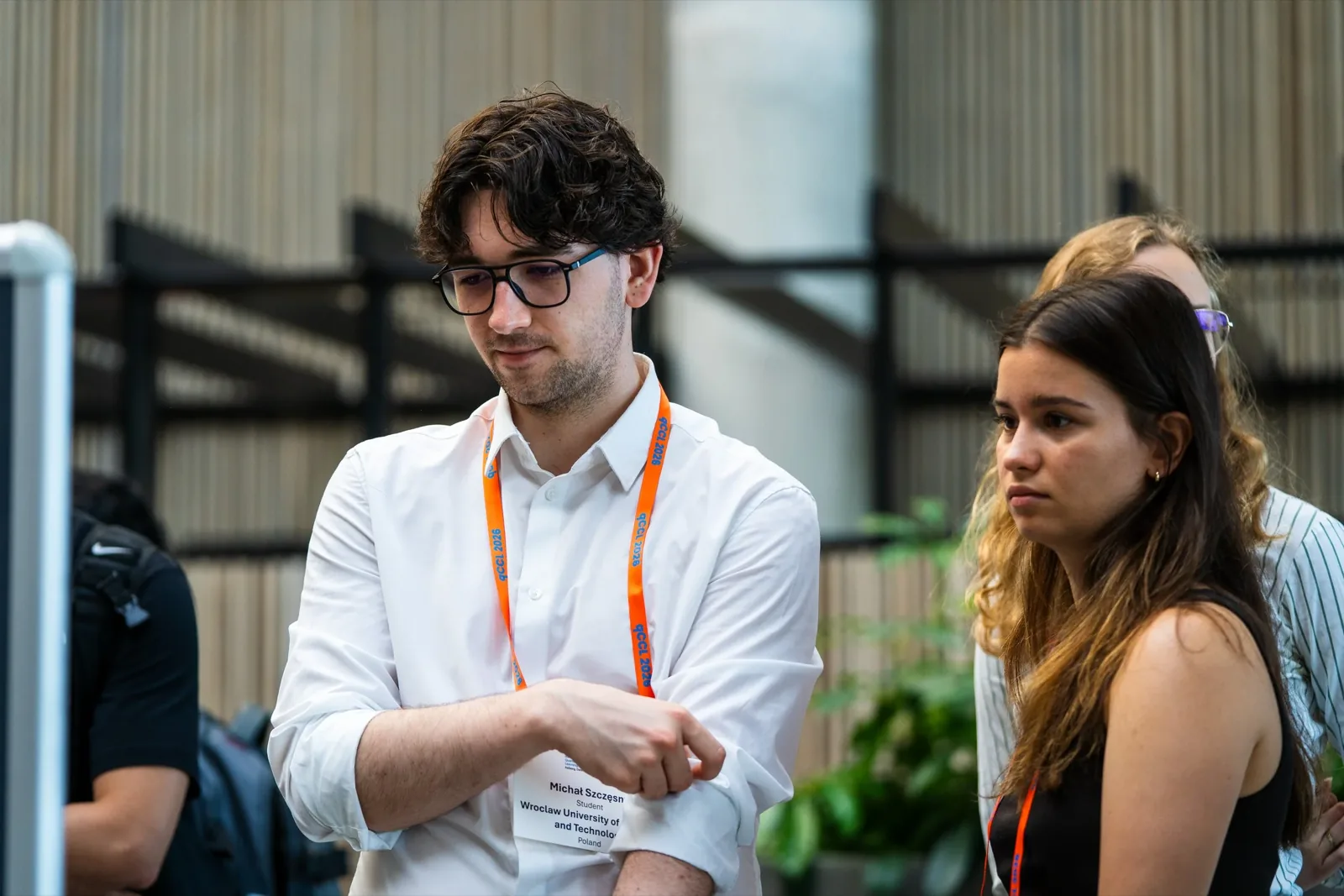
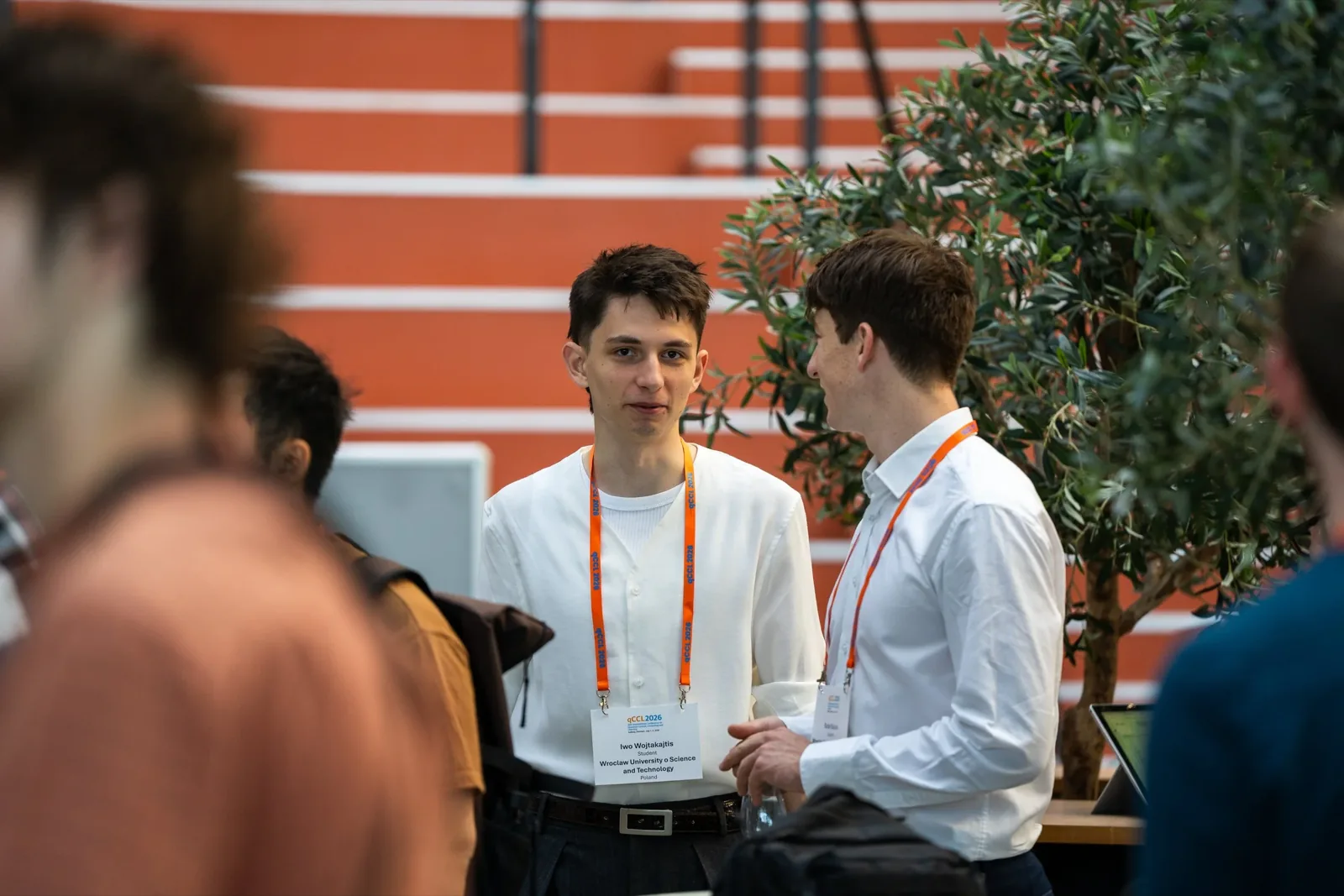
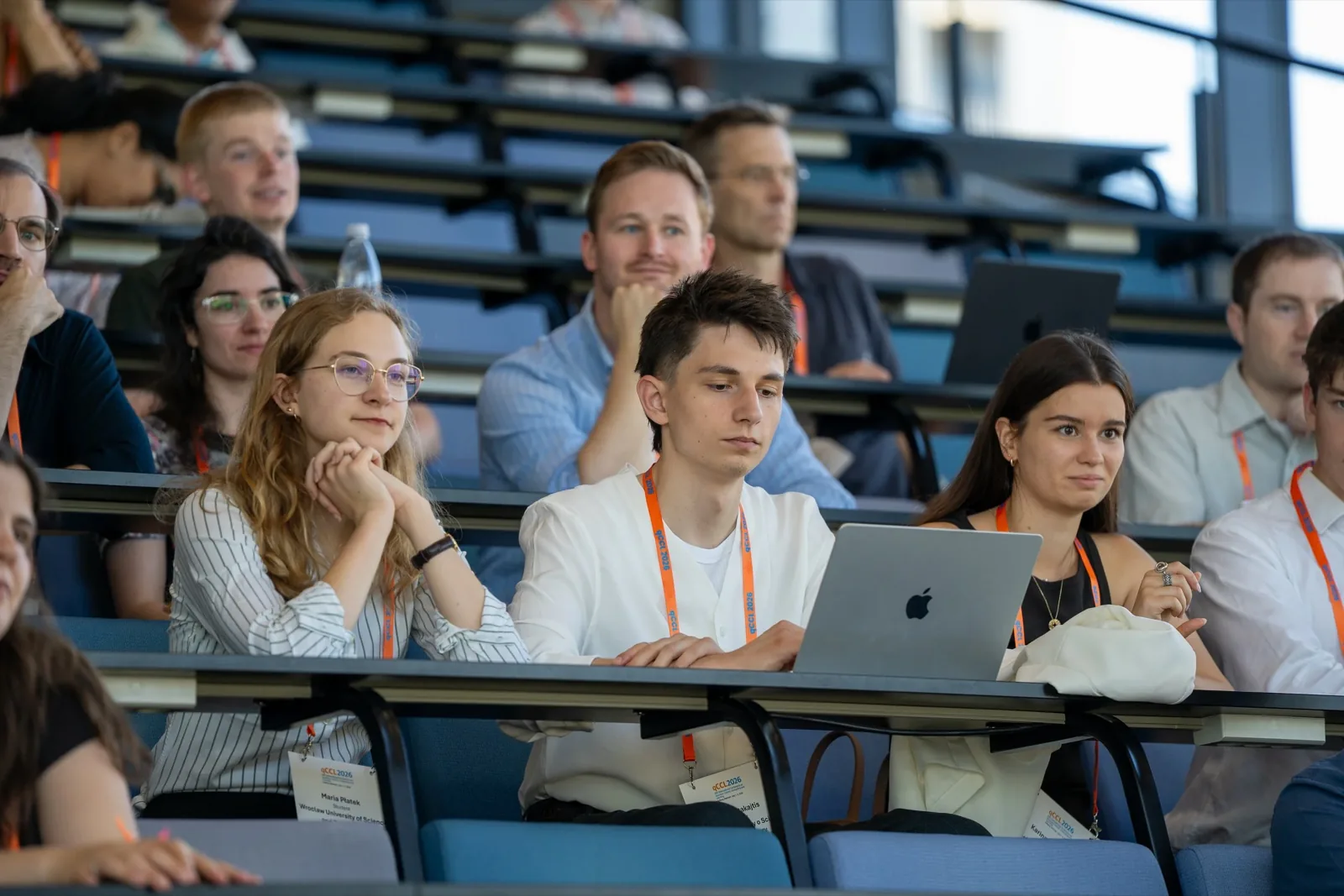
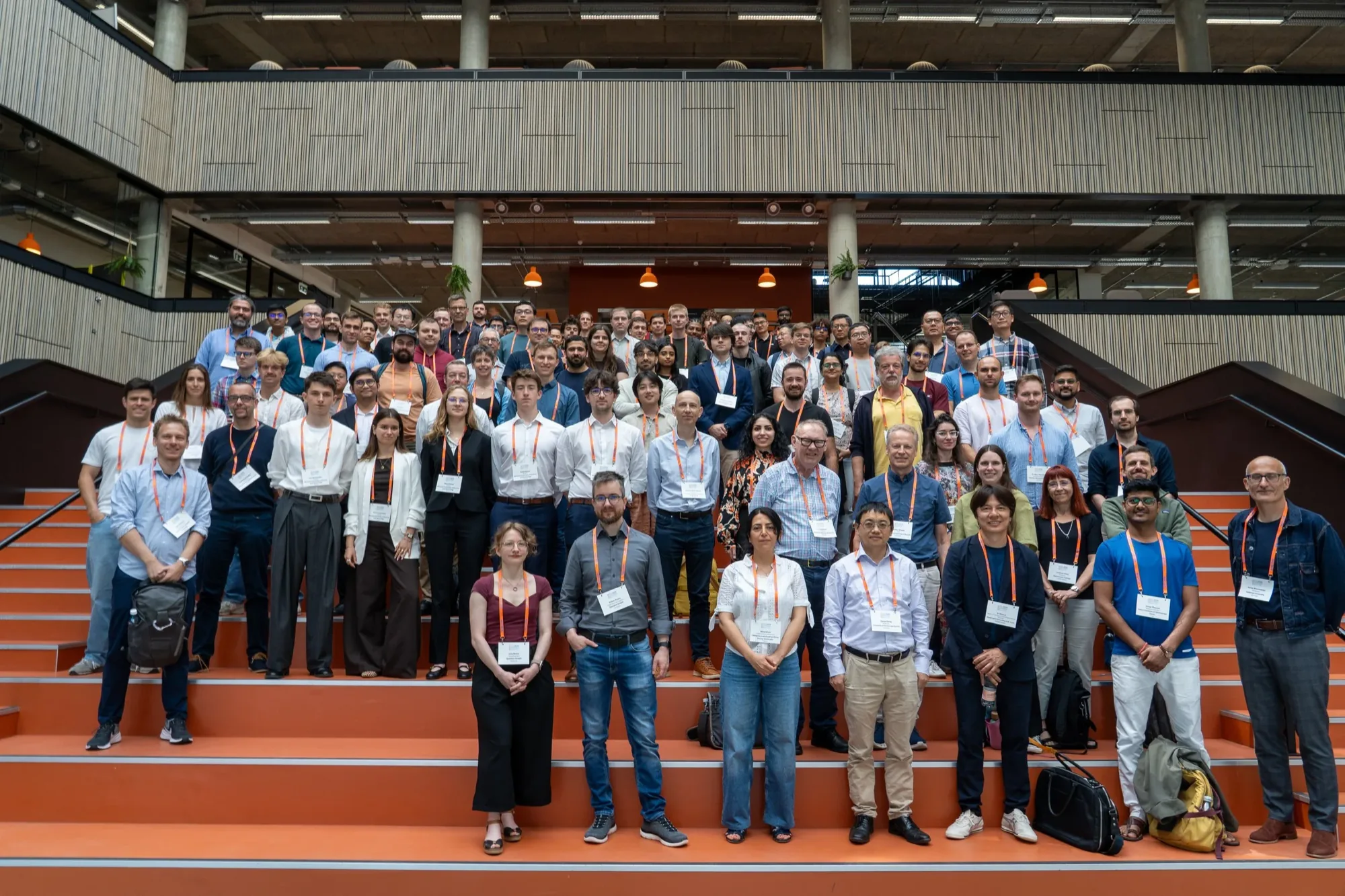
The QC1 abstract was peer-reviewed and accepted for an oral talk at IEEE qCCL 2026 in Aalborg, Denmark, presented in the Quantum Machine Learning session. The talk set out the hardware-efficient ansatz design, the five-axis evaluation framework, and the ODRA 5 physical-QPU results described on this page. Quantum processor access was provided by the Wrocław Centre for Networking and Supercomputing; the research was carried out at the Department of Artificial Intelligence, Wrocław University of Science and Technology.
Experiment and Branch Map
QC1 grew through many branches and experiment tracks. The public repository now consolidates that work into an installable package, notebooks, hardware scripts, checkpoints, and result artifacts.
Dataset and First VQC Prototypes
Exploratory analysis, early angle encoding, and first hybrid classifier notebooks established the banknote benchmark and modeling loop.
Classical Baselines
The DNN branch and the classical ML notebook on main supplied context for the dataset and kept the quantum work anchored to measurable controls.
Ansatz Families and Checkpoints
Simulator-oriented and ODRA-adapted ansatz variants were trained, compared, and saved as reusable weights for later studies.
Noise-Aware Cross-Validation
Five-fold training and phenomenological expectation-value noise runs tested whether the ansatze were robust or merely overfit to ideal simulation.
Depth Scaling
Depth-2, depth-4, and depth-6 runs quantified how parameters, transpiled depth, gate counts, and noise sensitivity evolve as circuits grow.
QPU-Only Hardware Studies
An isolated branch collected physical IQM Spark notebooks for fidelity, repeated-shot evaluation, model testing, and ansatz/depth comparisons.
Clean Package and Result Artifacts
The current mainline packages shared logic under qbanknote, adds smoke tests, scripted IQM metric runners, KL/Meyer-Wallach workflows, methodology notes, and the shared result artifacts.
ODRA-Native vs Simulator-Oriented
The central QC1 comparison is not just which circuit trains best in a notebook. It asks which ansatz survives the translation from ideal circuit to the native gate set and calibration reality of IQM Spark.
Five-fold means under the same folds, samples, and shot protocol. The hardware-aligned ansatz wins in every fold, though the per-fold margin ranges from 4.3 to 21.1 pp.
A 51.7% reduction in compiled depth for the ODRA-native circuit.
The ODRA-native design avoids a large part of the decomposition overhead.
Higher estimated physical reliability aligns with the hardware classification gap.
Expressibility alone does not predict physical-QPU performance.
Five-Axis Evaluation Framework
Compiled Resource Costs
Physical depth, total gate counts, and native two-qubit gate counts after transpilation to IQM Spark.
Fidelity Proxies
Composite physical reliability estimates using one-qubit, two-qubit, and measurement error channels.
Expressibility Diagnostics
KL divergence to the Haar pairwise-fidelity law and Meyer-Wallach entanglement workflows for circuit-family behavior.
Noise-Aware Optimization
Five-fold CV under ideal and phenomenological expectation-value noise, plus LED capacity diagnostics.
End-to-End QPU Runs
Physical IQM Spark evaluation with pilot/final shot schedules, repeated runs, statevector references, and fold-level paired comparisons.
Contributors
- Iwo Wojtakajtis
- Rafał Balicki
- Karina Leśkiewicz
- Maria Płatek
- Michał Szczęsny
Gallery